The organic ranking of a product is directly influenced by sales. As a result, more sales produced through PPC ads will improve a product’s organic rating.1
How Does Amazon PPC Help Organic Rankings?1
The story is different on Amazon. Amazon’s paid search ranking is influenced by the same factors that drive its organic position. The purpose of Amazon’s organic ranking system, in other words, is to serve products that are both relevant and buyable.
This influence is particularly relevant when it comes to new items. New items typically lack a sales history and, as a result, performance data, which hurts organic ranking. This can be changed using Amazon PPC, which drives traffic to the product listing and so increases sales.
Sponsored Products advertisements on Amazon can help you boost your overall rankings2
The A9 algorithm is used to power the Amazon marketplace. This algorithm determines which products are promoted to page 1 rankings, including the coveted #1 slot.
The A9 algorithm considers a variety of parameters, including the title of each product, its click-through rate, conversion rate, and verified reviews – among other things – to determine whether your products appear in the Amazon index.
In this situation, the click-through rate (or CTR) is a measure of the percentage of people who view your product and then click on it (for marketers, Amazon is able to track impressions). The conversion rate is the percentage of people who buy a product out of all those who click on it.
So, what does all of this mean? Amazon makes no distinction between how clicks are acquired and how conversions are achieved. Paid ads on Amazon can instantly place your products at the top of page 1, in front of thousands of potential customers, so they can boost your organic performance as well. This is a quick approach to increasing clicks, sales, and verified customer reviews (if your things are good)!
It’s quite difficult to automatically appear on page 1 of Amazon eCommerce due to the fierce competition. Additionally, getting your products into the “Buy Box” in order to increase sales is challenging.
Organic Sales Drop3
If you notice a decline in organic sales, it might be what’s behind your rising TACoS. This usually happens when your organic rank drops or because the search volume on keywords that you rank for has fallen.
To fully understand what’s going on, you need to track it.
Start by making an Excel sheet with a column for your weekly ad, total, and organic sales (total sales – ad sales) for 6 to 8 weeks and compare.
You can also confirm if a drop in organic sales is due to a fall in your organic rank by using Helium 10 or any other tool to check your organic rank over time.
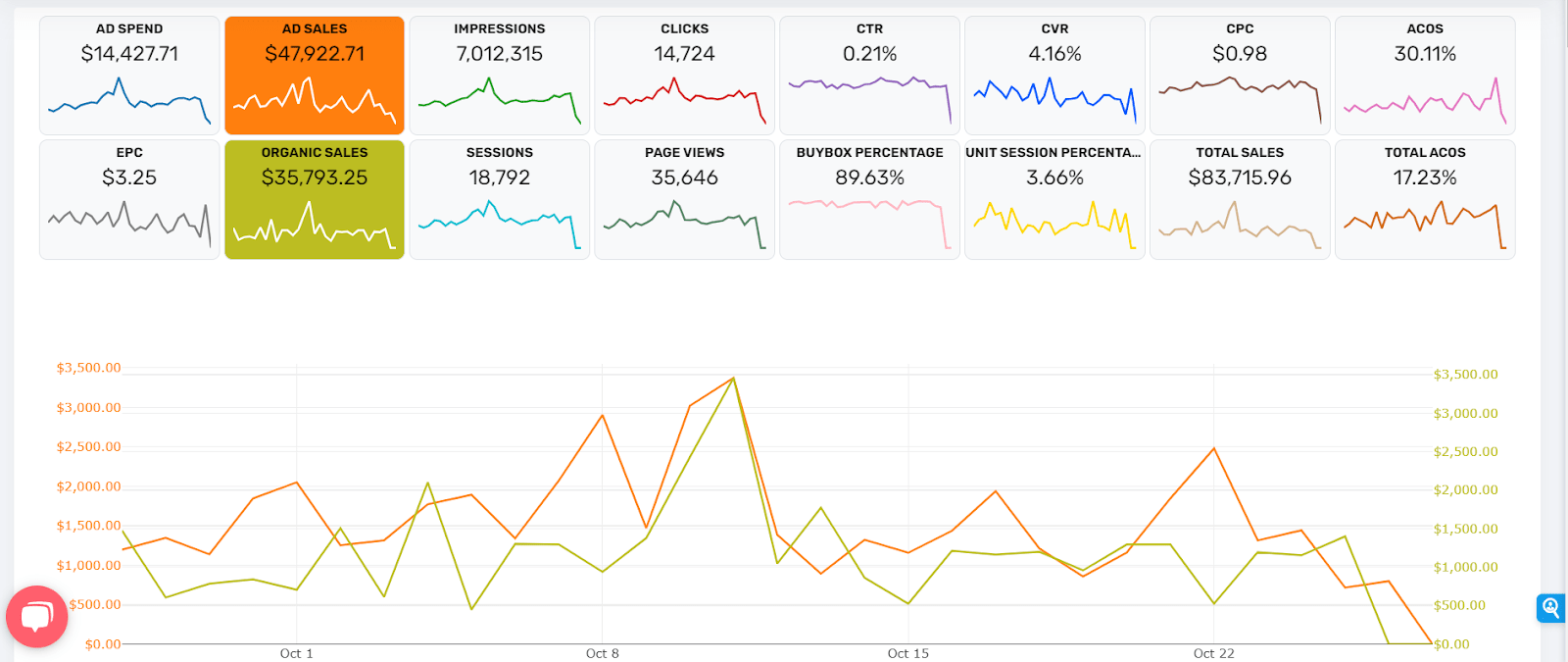
Once you’re sure that a drop in organic sales is why your TACoS is higher, you can now track which keywords you lost rank on and how much rank was lost. Then you can create campaigns to regain your rank on those keywords.
You can also lower your prices to improve CVR until you gain enough sales velocity to outrank your competitors on your major keywords.
Take a closer look at your Amazon Advertising Reports.1
Another issue to consider for those powerful keywords is how buyability affects Amazon’s positive feedback loop. That is, the more sales you achieve via Amazon PPC, say 100 versus 70, the more opportunity you’ll have to improve those buyability criteria.
What you actually want to consider is how many reviews are coming in from those paid orders, as well as what the organic paid review ratio is. You should begin by using these elements to assist you develop an overall strategy, which you can then utilise to improve your overall rankings, both paid and organic.