


Bids handle efficiency at the click level, but budgets decide which parts of your account get the oxygen to scale.1
Budgets that match your strategy, not your guess.2
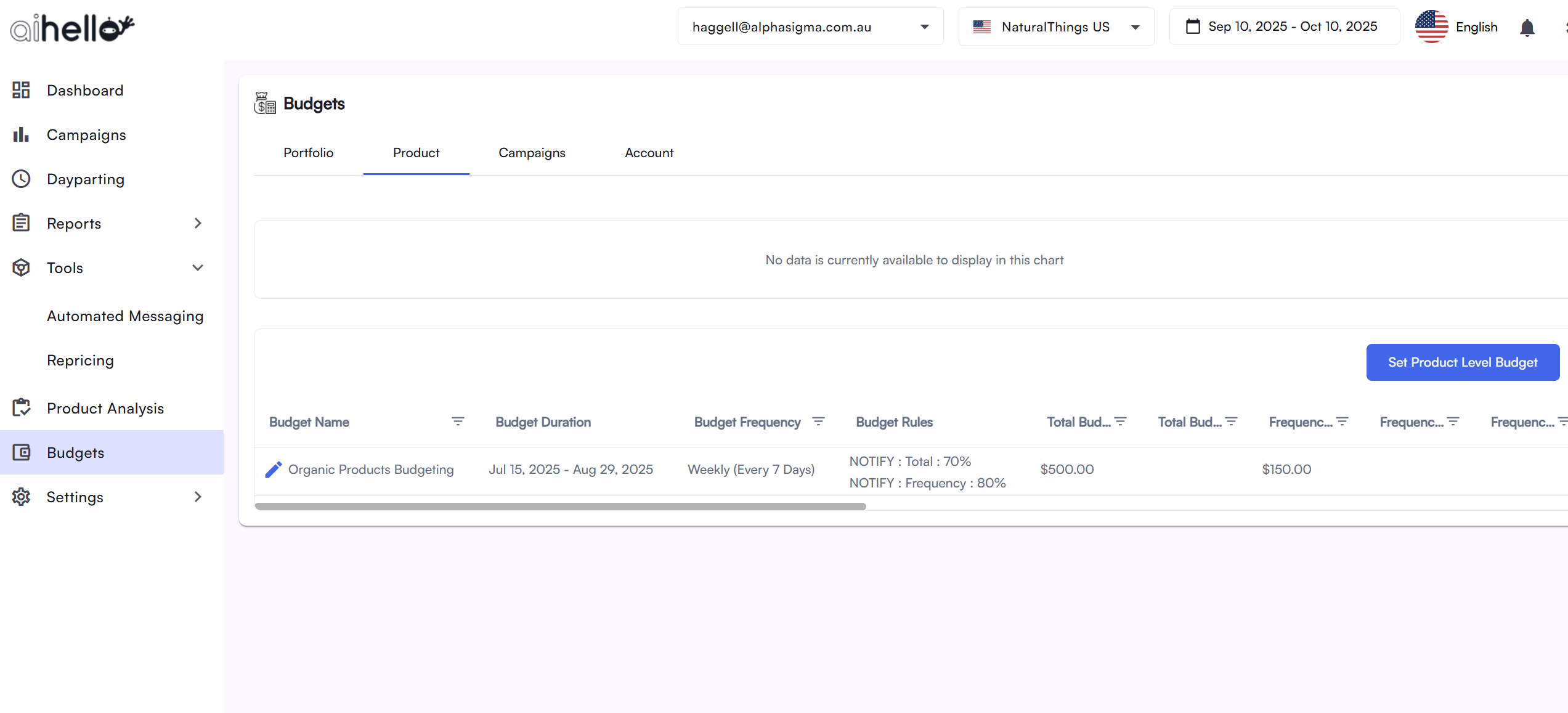
Push top-performers and starve zombies with budget control at portfolio, product, and campaign levels. Roll up pacing by day and week so spend follows demand then layer manual dayparting to cut midnight waste and lean in when shoppers are live.
Amazon Portfolios for Profiles3
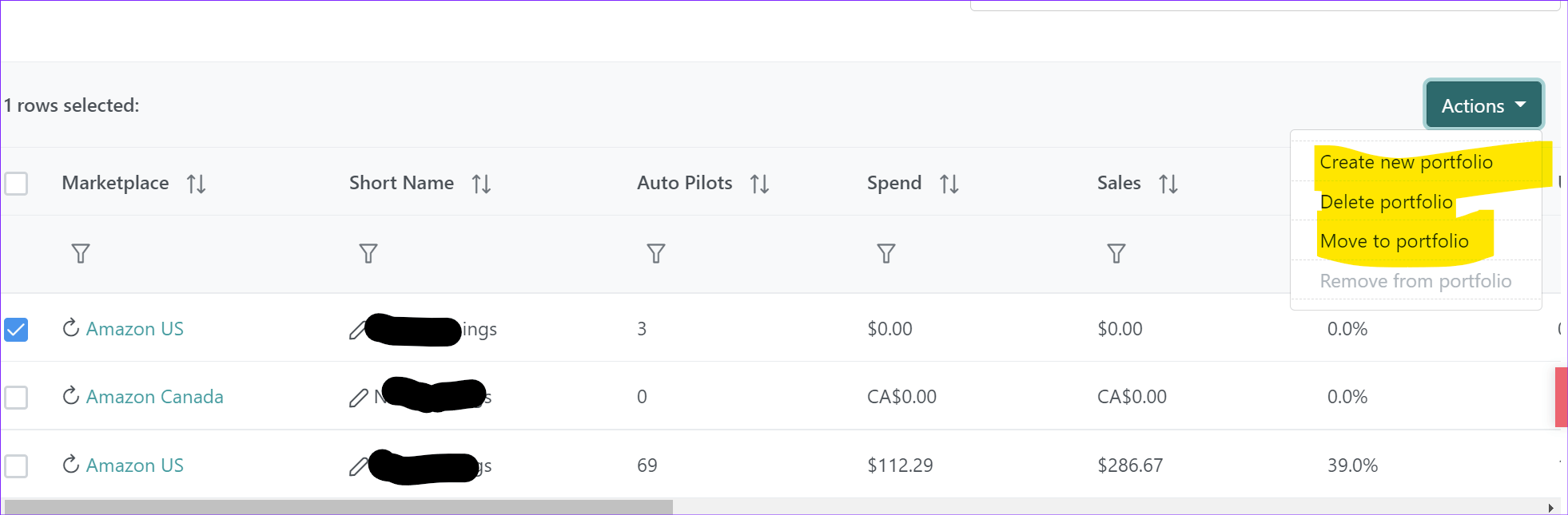
We are excited to release our Profile Portfolios for managing Amazon Advertising Profiles. This feature is more geared towards Advertising agencies rather than individual sellers.
For Agencies that manage multiple clients, you would usually end up with hundreds if not thousands of profiles on your dashboard.
Budget Reallocation: Shift to Converting Targets, Cap Experiments1
Start by mapping your campaigns into quadrants based on ACOS and volume:
- high volume / low ACOS (scale),
- low volume / low ACOS (nurture),
- high volume / high ACOS (fix or trim),
- low volume / high ACOS (cut or heavily restrict).
Increase daily budgets on high-volume, low ACOS campaigns so they do not go dark mid-day, and pull budget away from low-volume, high ACOS campaigns that primarily exist to test ideas. For experiments, apply strict budget caps and clear exit criteria, such as shutting off a test if it spends a set amount without a sale or if ACOS stays above a defined threshold across a 14 to 30-day window.
AiHello helps automate this budget reallocation loop by continuously tracking ACOS, conversions, and spend across campaigns and product targets, then surfacing where more budget can safely drive profit and where money is being burned. You can pair this with AutoPilot’s bid logic so that budgets and bids are pulling in the same direction: winners get both higher bids and more budget, while losers get bid cuts and eventual budget reductions.
This system-level view turns your account into a living portfolio where capital flows naturally toward the most efficient, profitable opportunities.
Budget Pacing: The Foundation of Controlled Scaling4
The biggest mistake sellers make when increasing budgets is assuming daily caps are enough. In reality, daily budgets don’t control when money is spent, only how much can be spent in total.
Without pacing, Amazon can exhaust your budget early in the day during poor-converting hours, leaving you invisible during peak buying windows. At scale, this creates unstable ACOS patterns that look random but are actually structural.
Proper budget pacing distributes spend intentionally across the day. It ensures your campaigns remain active during high-conversion periods while preventing early-day overspend from low-quality traffic.
In controlled scaling environments, pacing protects you from:
- • Budget burn during low-intent hours
- • Missing late-day conversion spikes
- • Overreacting to short-term CPC fluctuations
This is one of the first areas where automation consistently outperforms manual control, simply because humans cannot monitor spend hour by hour.
Budget Pacing That Follows Demand (Not Guesses)5
Setting an ad budget and walking away is how you miss the compounding gains of demand-responsive advertising. Static budgets punish either momentum or profit; being too aggressive wastes money, and being too timid leaves market share on the table.
Why static budgets fail
- They run out too soon during unexpected demand spikes.
- They choke performance during season peaks or promotion days.
- They leave unused spend sitting idle when you could be capturing more revenue.
Smart, adaptive pacing
AiHello’s budget pacing algorithm reads the real signals: conversion velocity, CTR spikes, inventory swings, and marketplace trends. Budgets and bids dynamically shift up or down based on detected demand, not on arbitrary, outdated pacing tables.
How to align with seasonality and CPC trends
- Use historical sales curves to spot Q4, payday, and event-driven surges.
- Sync pacing with real-time CPC movements raises budgets when CPCs drop, and conversions climb, and tightens when costs rise out of range.
- Review compounding effects: Just a 10% spend reallocation to high-performing hours, week over week, can add thousands in net new profit by quarter’s end.